FTL vs PTL: Key Differences in Road Transport | Jyoti Freight
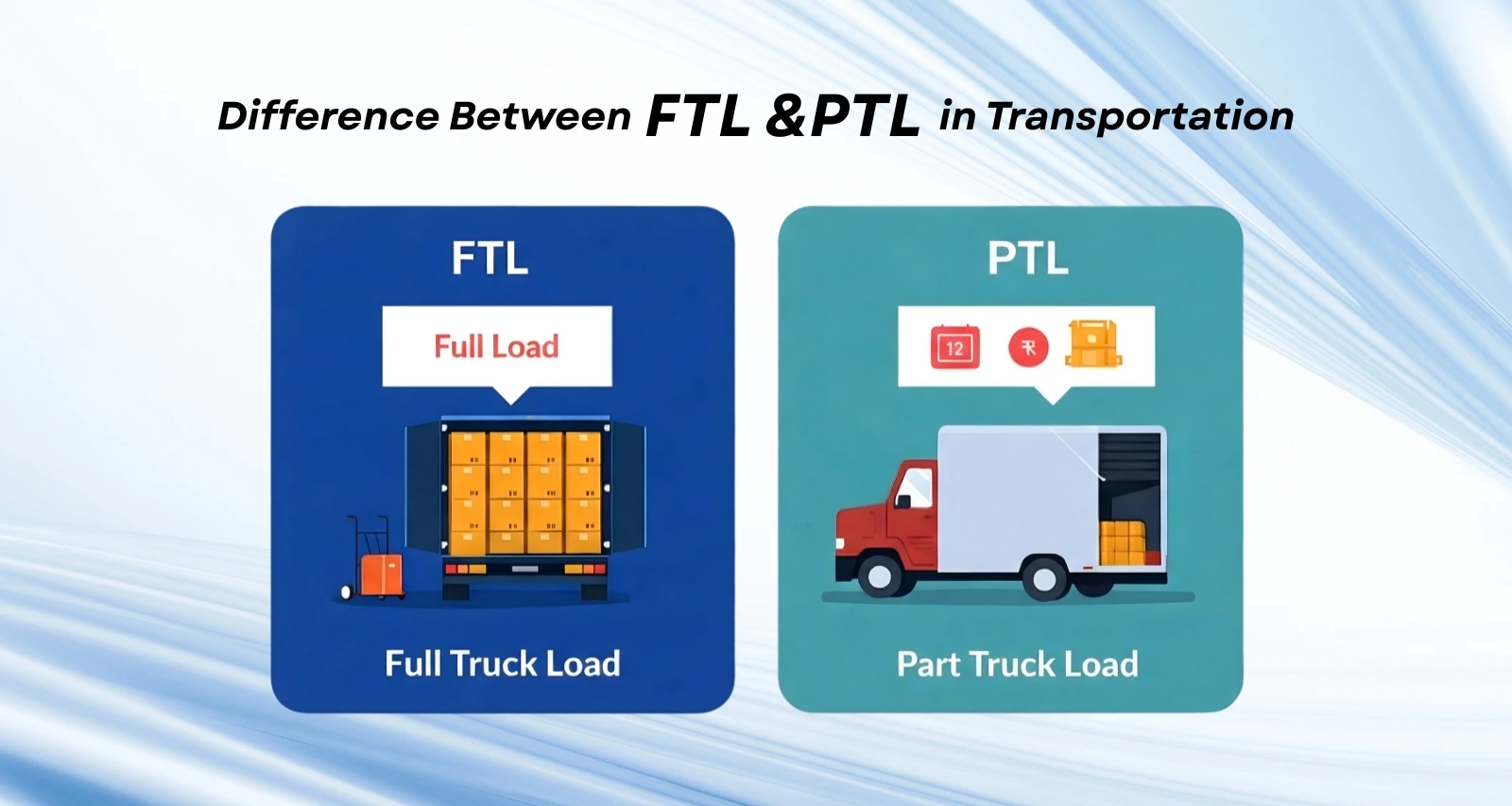
Difference Between FTL and PTL in Transportation
When businesses start shipping goods across cities or states, one common question comes up: what is the real difference between FTL and PTL and which one makes more sense for your business?
If you are a business owner, a transport operator or someone exploring logistics shipping methods, understanding this difference can help you save money, reduce delays and improve overall supply chain efficiency.
In India’s growing transportation market, choosing between full truck load and part truck load transport is not just about truck size. It’s about cost strategy, delivery timelines, risk management and long-term logistics planning.
Let’s break it down in a clear and practical way.
What Is FTL in Logistics?
FTL full form in logistics is Full Truck Load. This means a single shipment occupies the entire truck. The vehicle is booked exclusively for one client, even if it is not filled to maximum capacity. FTL transport service in India is commonly used for:
- Bulk raw materials
- Large manufacturing shipments
- High-value goods
- Time-sensitive deliveries
- Direct warehouse-to-warehouse transport
Since the truck moves directly from pickup to destination without additional stops, transit time is usually shorter and goods are handled less frequently.
For companies that ship in large volumes regularly, affordable FTL shipping can actually be more economical than it appears.
What Is PTL in Transport?
PTL full form in transport is Part Truck Load. In this system, multiple shipments from different businesses share space in one truck. Each client pays only for the space their goods occupy.
A part load transport service is suitable for:
- Small and medium enterprises
- Moderate shipment sizes
- Regular but smaller dispatches
- Cost-sensitive deliveries
PTL allows businesses to move goods without waiting to accumulate a full truckload.
FTL vs PTL Difference: The Core Comparison
At first glance, the FTL vs PTL difference may seem simple—one is full, one is shared. But the operational impact goes deeper.
- 1. Cost Structure
FTL shipping cost is generally fixed per truck. It depends on distance, route demand, fuel rates and vehicle type. PTL shipping cost is calculated based on weight, volume and distance. Since multiple clients share the truck, the cost burden is divided.
For small shipments, PTL is usually more cost-effective. For bulk shipments, FTL often becomes more economical per unit.
- 2. Transit Time
FTL shipments move directly from source to destination. This reduces transit time and improves delivery predictability. PTL shipments may pass through sorting hubs or distribution centers, which can slightly increase delivery time.
If speed is a priority, FTL is typically preferred.
- 3. Risk and Handling
In FTL, goods are loaded once and unloaded once. Less handling means lower risk of damage. In PTL, shipments are consolidated and separated at different hubs. While professional logistics transportation systems manage this carefully, handling points are higher.
Comparison Table
| Feature | FTL | PTL |
|---|---|---|
| Truck Usage | Entire truck for one client | Shared truck |
| Delivery Time | Faster, direct | Slightly longer |
| Cost | Higher overall | Lower, shared cost |
| Handling | Minimal | Multiple handling points |
| Best For | Large shipments | Medium-sized shipments |
Full Truck Load vs Part Truck Load: Real Business Scenarios
To better understand full truck load vs part truck load, let’s look at practical examples.
- Example 1: FMCG Company
A large FMCG brand moving goods from a manufacturing plant to a regional warehouse may prefer FTL transport service in India for faster bulk movement.
- Example 2: Textile Supplier
A small textile unit sending limited stock to multiple retailers may use part load transport service to control costs.
- Example 3: Electronics Distributor
An electronics company shipping high-value items might choose FTL for safety and reduced handling.
Road Transport Types in India
India heavily relies on road transport for domestic transportation. Among various road transport types in India, FTL and PTL are the most commonly used.
Why road transport dominates:
- Door-to-door delivery
- Flexible routing
- Wider geographic reach
- Faster interstate movement
Compared to rail or sea, road-based transportation offers better flexibility for B2B logistics solutions.
Impact on Supply Chain Efficiency
Choosing the right shipping model directly affects supply chain efficiency.
FTL improves:
- Faster inventory replenishment
- Predictable transit schedules
- Lower risk of stockouts
PTL improves:
- Better vehicle utilization
- Reduced empty truck movement
- Lower transport cost for smaller businesses
Businesses aiming for strong logistics cost often combine both methods depending on shipment size and urgency.
How FTL and PTL Support Logistics Cost Optimization
Logistics cost is not about choosing the cheapest option. It is about selecting the most efficient model based on shipment characteristics.
For example:
- A company shipping 15 tons daily may benefit from FTL.
- A company shipping 3 tons weekly may benefit from PTL.
By analyzing shipment frequency and volume patterns, businesses can reduce wasteful spending and improve transportation planning.
Types of Freight Transportation in India
While discussing logistics shipping methods, it’s important to understand broader types of freight transportation:
- 1.Road freight
- 2.Rail freight
- 3.Air freight
- 4.Sea freight
Among these, road freight remains the backbone of domestic distribution due to flexibility and accessibility.
FTL and PTL both fall under road-based transportation and are essential for domestic B2B logistics solutions.
Which Option Is Better for Your Business?
There is no universal answer.
Choose FTL if:
- You ship large quantities regularly
- Delivery speed is critical
- Goods are fragile or high-value
- You prefer direct transportation
Choose PTL if:
- Shipment size is moderate
- Budget control is important
- Delivery can be slightly flexible
- You want shared cost benefits
The key is matching your transport strategy with your operational goals.
Growth of Organized Logistics in India
India’s logistics sector has evolved significantly with:
- Better highways
- Digital shipment tracking
- Organized warehousing
- Integrated B2B logistics solutions
This growth has improved overall logistics transportation standards and reduced inefficiencies in transportation.
Final Thoughts
The difference between FTL and PTL is not just about truck capacity it is about aligning transportation choices with business goals. FTL offers speed, control and minimal handling, while PTL provides flexibility and cost efficiency for smaller shipments.
For business owners and transport companies, selecting the right logistics shipping method can directly impact profitability and supply chain efficiency. A thoughtful approach that considers shipment volume, urgency and long-term growth plans ensures better logistics cost optimization and smoother transportation operations.
FAQs
FTL full form in logistics is Full Truck Load, where one client uses the entire truck for their shipment. It is suitable for bulk goods and time-sensitive deliveries requiring direct transportation.
PTL full form in transport is Part Truck Load. Multiple businesses share one truck, making it a cost-effective option for smaller or medium-sized shipments.
The difference lies in truck usage, cost structure and transit time. FTL is dedicated and faster, while PTL is shared and more budget-friendly.
Both FTL and PTL improve supply chain efficiency in different ways. FTL supports speed and control, while PTL supports cost savings and better vehicle utilization.
Businesses evaluate shipment volume, delivery urgency, budget and product sensitivity before choosing between full truck load vs part truck load transportation.